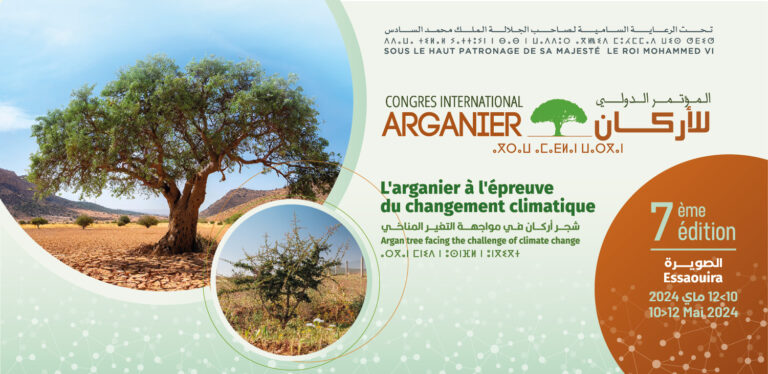
The United Nations will celebrate May 10, 2024, the fourth International Argan Day, since its proclamation by General Assembly resolution A/RES/75/262 in 2021. The resolution, submitted by Morocco, was sponsored by a large number of UN member states. This celebration crowns the efforts of the Kingdom of Morocco in promoting the argan tree as an intangible cultural heritage of humanity and an ancestral source of resilient and sustainable development.
The Kingdom of Morocco strives to maintain and develop community practices for sustainable management of the argan ecosystem, particularly in a context of acute water stress and increasing climate change. We wish to share with the world our knowledge to build resilience and the emblematic ecosystem of the argan tree which conveys know-how, useful experiences to rebuild biodiversity, contribute to food security and re-establish a balanced link between humans and nature.
The theme of this year’s International Day “Argan tree facing the challenge of climate change” aims to highlight the role of the argan tree in strengthening the resilience of communities and adapting to climate change, all by empowering rural women through the support and promotion of cooperatives and agricultural organizations.
The argan tree (Argania spinosa) is a species endemic to Morocco, which grows in arid and semi-arid zones. It is the characteristic species of a forest ecosystem, also called Arganeraie, rich in endemic flora. It survives a harsh environment marked by water scarcity, risk of erosion and poor soils.
This extraordinarily beautiful ecosystem is not only important in terms of conservation, but also for research and socio-economic development, due to its agro-sylvo-pastoral use.
Argane oil, known worldwide, is extracted from the fruits of the argan tree and has multiple applications, notably in traditional and complementary medicine, as well as in the culinary and cosmetic industries. Mainly used as an oil, its anti-aging properties are appreciated by the cosmetic industry, and its growing demand in the food industry has made it the most expensive edible oil in the world.
The argan tree is generally a multi-purpose tree that supports income generation, increases resilience and improves climate adaptation, playing a very important role in achieving all three dimensions of sustainable development – economic, social and environmental.
The sustainable production system in the argan sector contributes to the economic empowerment and financial inclusion of local communities, particularly for women living in rural areas. Cooperatives play a key role in promoting local employment opportunities and can play an important role in contributing to food security and poverty eradication.
For centuries, the argan tree has been a pillar of rural communities, which have developed a specific culture and identity, sharing their traditional knowledge and skills through non-formal education, particularly the unique knowledge associated with production traditional argan oil by women.